

Bombardier: All About Canada’s Leading Business Jet Manufacturer
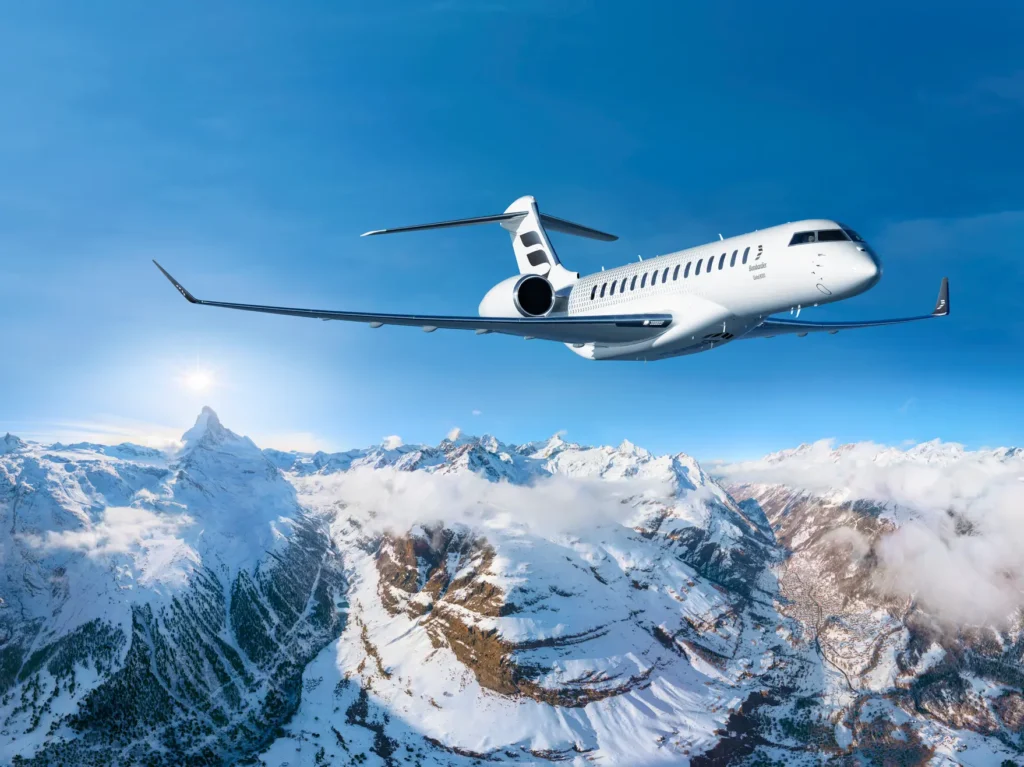
Founded in 1942 in Quebec, Bombardier Inc. has undergone quite the transformation over the past decade. The company might be known for its long-range business jets, but it began on a much smaller scale… making snowmobiles. Let’s take a look at how Bombardier went from helping Canadians deal with their notoriously brutal winters to becoming the world’s second-largest maker of business jets.
Bombardier Inc.—Company Overview
Bombardier Inc. was founded in 1942 by Joseph-Armand Bombardier as L’Auto-Neige Bombardier Limitée, initially making tracked snow vehicles designed for—and necessary in—the harsh Quebec winters. Over the following decades, it expanded beyond recreational vehicles into rail transportation and aerospace. Today, the publicly traded company is headquartered in Montreal, Quebec, employs approximately 18,000 people worldwide, and generates annual revenues of roughly $9.55 billion. Éric Martel serves as president and CEO.
From Snowmobiles to Business Jets
Bombardier’s transition to a focused business aviation manufacturer ramped up in the late 2010s, as financial pressures and market shifts prompted a restructuring of its portfolio. A key turning point was the transfer of the C Series commercial aircraft program to Airbus, where it now operates as the Airbus A220. The move followed trade disputes and rising development costs that strained the company’s finances. Bombardier also exited its regional jet programs and divested its rail division to Alstom, ending its longstanding presence in rail transportation.
That business once included plans to expand manufacturing at major United States transit hubs such as Chicago, where Bombardier had pursued rail car assembly and job creation opportunities, but, alas, it was not to be. By the early 2020s, after selling these assets and reducing debt, Bombardier’s focus was on one thing only: business jets.
Bombardier Aircraft Portfolio

Bombardier’s current product lineup centers on two primary Canadian-made aircraft families: the Challenger and Global series.
Challenger Series
The Challenger series traces its roots to the early 1980s, when Bombardier entered the large-cabin business jet market with the Challenger 600 program. Since then, the platform has evolved into the company’s super-midsize offering, serving corporate flight departments, charter operators, and fractional ownership providers. Current Challenger aircraft offer ranges of approximately 3,000 to 4,000 nautical miles, supporting transcontinental US travel and select international routes. Compared with ultra-long-range aircraft, the Challenger series blends cabin comfort and operating efficiency, appealing to operators seeking lower direct operating costs without sacrificing range.
Global Series
Bombardier’s Global series is its long-range and ultra-long-range segment made for intercontinental corporate and private operators. Its flagship, the Global 7500, has a range of approximately 7,700 nautical miles and is among the longest-range purpose-built business jets in service, capable of connecting major city pairs such as New York to Hong Kong or Singapore to Los Angeles without refueling.
Following the success of the Global 7500, Bombardier began developing the Global 8000, which extends range to approximately 8,000 nautical miles and has a top speed of Mach 0.94. Bombardier has described these technologically advanced airplanes as the fastest civil aircraft developed since the Concorde (though they don’t quite break the sound barrier). The aircraft features four living spaces and is built for long-distance travel, with cabin pressurization designed to reduce fatigue on long flights. The company is now preparing for its first deliveries and scaling production to meet demand in the ultra-long-range segment.
Manufacturing and Facilities
Bombardier’s manufacturing operations are based mainly in Canada, with service and support facilities in the US and other countries. The company operates about 10 fully owned service facilities across six countries, along with parts depots and mobile response teams. The company assembles its aircraft in Montreal, where much of its engineering and leadership is based. Toronto has also played a role in Bombardier’s aerospace operations over the years.
In the US, Bombardier chose Wichita, Kansas — a major aviation hub — as a headquarters location for certain business aviation functions and added service and maintenance jobs. Other recent service network investments include a planned facility in Fort Wayne, Indiana, and a new center under development in Abu Dhabi, UAE. On the production side, Bombardier is building major structural components for the Global 8000 in Quebec, Texas, and Mexico to increase production capacity ahead of the aircraft’s entry into service.
Bombardier’s Business Strategy

With the company now focused entirely on business aviation, most of Bombardier’s revenue comes from business jet deliveries and the services that support them. While aircraft sales are still the main source of income, maintenance, parts, refurbishments, and long-term service agreements provide more consistent revenue from planes already in operation. The company also offers special mission versions of its aircraft for government and defense customers. In addition, Bombardier has made its fleet compatible with sustainable aviation fuel and is committed to reducing operational emissions.
Bombardier—Summary and Outlook
Bombardier enters this phase of its history in a far more stable position than it was a decade ago. With debt reduced and its business now centered on long-range jets, the company has carved out a clear market position. Orders for its Challenger and Global aircraft remain steady, and its growing service network provides a more reliable revenue base than in years past.
That said, business aviation is inherently cyclical. Demand tends to rise when companies are profitable and confident, and slow down during broader economic downturns. In the long-range category, Bombardier competes directly with Gulfstream and Dassault Aviation, where speed, range, and cabin performance often determine buying decisions. Supply chain pressures are also a reality across the aerospace industry (among many others), and production timelines can shift accordingly.
Even so, demand for long-range and super-midsize jets has held up, and as long as it maintains its competitive edge, the future for Bombardier looks up.
FAQs on Bombardier Aviation
What is Bombardier’s net income?
As of February 2026, Bombardier reported net income of roughly $369 million over the past 12 months.
Who regulates and certifies Bombardier aircraft?
Bombardier aircraft are certified by national aviation authorities, including Transport Canada and the Federal Aviation Administration (FAA) in the United States. Jets such as the Global 8000 must complete the same type certification process required of all long-range business aircraft before entering service. Certification timelines can vary across programs. Aviation International News reported that Gulfstream’s G500 and G600 received Transport Canada approval in February 2026, following an earlier delay in Canadian type certification due to documentation issues.
What are Bombardier Global Express aircraft?
The Bombardier Global Express family refers to the Montreal-based company’s long-range and ultra-long-range business jets. Earlier Global Express models laid the foundation for Bombardier’s presence in intercontinental aviation, and today’s Global 7500 and Global 8000 extend that capability.
How many aircraft has Bombardier sold?
Bombardier customers operate a fleet of more than 5,000 Challenger and Global jets across over 90 countries. In early 2025, the company announced a firm order for 50 additional Challenger and Global aircraft from a single customer. A 2025 industry report ranked Bombardier as the No. 2 business jet manufacturer by shipment value, with deliveries or aircraft sold totaling approximately $7 billion.
Does the Canadian government support Bombardier?
The Canadian government has historically provided financial support for large development programs such as the C Series aircraft, which was later transferred to Airbus and now operates as the Airbus A220. Today, Bombardier operates as a pure-play business jet manufacturer under global regulatory and market dynamics.
Which airlines fly Bombardier aircraft?
Bombardier no longer manufactures commercial airliners, focusing exclusively on business jets, which are typically operated by corporate flight departments, charter companies, and private owners rather than commercial airlines. Many airlines previously operated Bombardier regional jets, particularly the CRJ series, including Air Canada, American Airlines (through regional affiliates), and Lufthansa CityLine. The company’s C Series aircraft program was transferred to Airbus and now operates as the Airbus A220, which is flown by major carriers worldwide, including Delta, JetBlue, and Air Canada.
Featured image credit: Bombardier
credit: Thomas